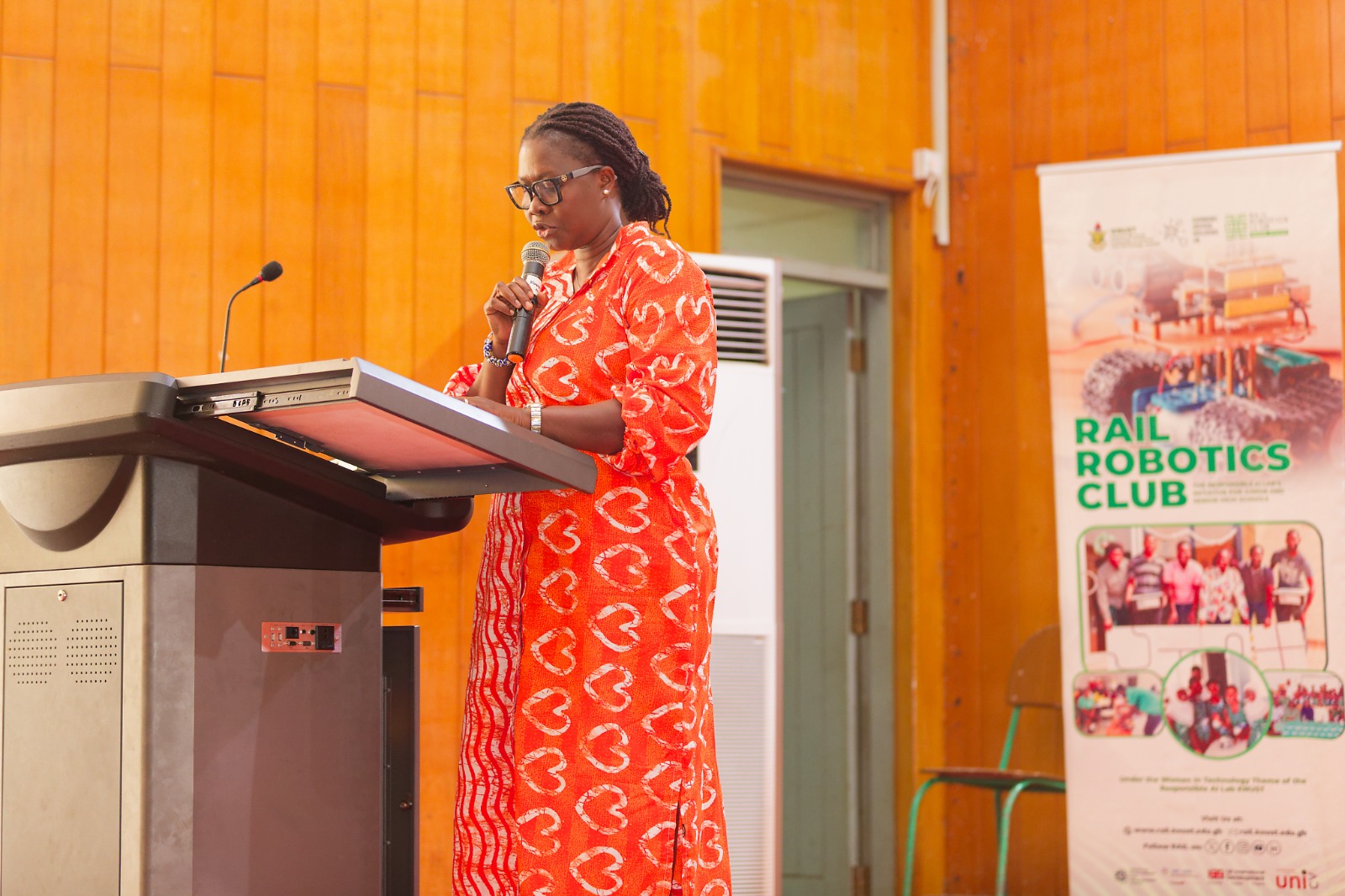
The head of the Gender, Inclusion and Vulnerability (GIV) Office at KNUST, Professor Mercy Badu, has called on stakeholders to prioritise inclusion as artificial intelligence continues to transform education systems.
Speaking during the Responsible AI Lab (RAIL) robotics training for mentors, she highlighted challenges faced by students with disabilities, including inaccessible learning resources and limited assistive technologies.
Professor Badu explained that AI can help address these barriers through innovations such as screen readers, adaptive learning systems and real-time transcription tools, but cautioned that technology alone cannot solve inequalities.
She stressed that without deliberate efforts, AI could widen existing gaps in education and urged educators to combine technological advancements with human support and guidance.
The programme also brought together education and technology experts who discussed the role of AI in shaping learning experiences and building a more inclusive educational environment.
Participants emphasised the need for responsible AI development, digital skills training and policies that ensure equal access to opportunities for all learners, including girls, rural students and persons with disabilities.
KNUST Calls for Inclusive AI as Technology Reshapes Education
KNUST Calls for Inclusive AI as Technology Reshapes Education