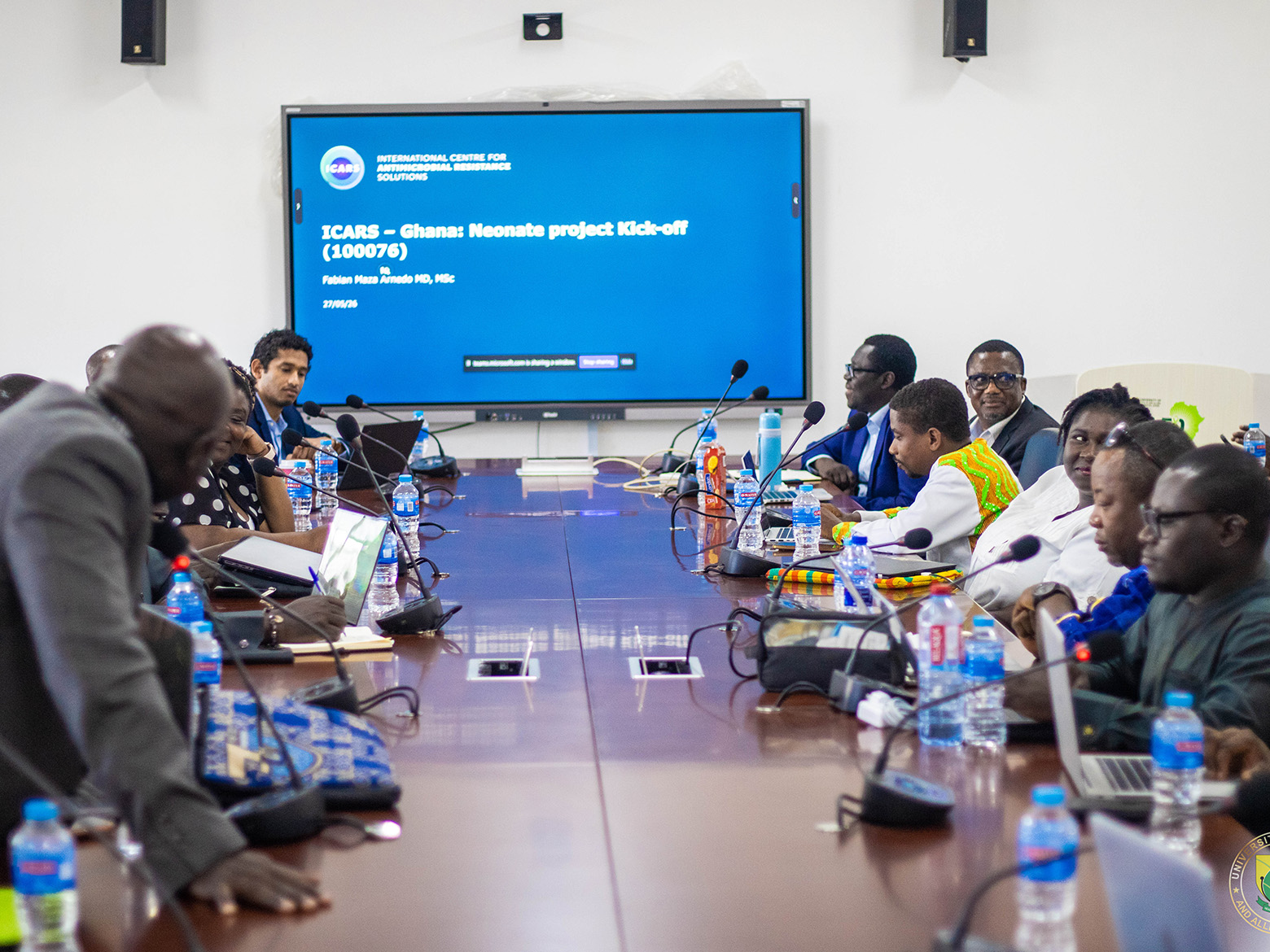
The University of Health and Allied Sciences (UHAS), in partnership with the International Centre for Antimicrobial Resistance Solutions (ICARS) and the Ministry of Health (MoH), has launched a major research project aimed at reducing neonatal infections and improving the rational use of antibiotics in the Volta Region.
The project, launched on May 7, 2026, at the UHAS Main Campus in Ho, brings together clinicians, pharmacists, laboratory scientists, and international partners to tackle rising antimicrobial resistance and preventable infections in newborns.
Health experts involved in the study revealed that up to 60% of neonates admitted to intensive care units may have infections, yet are often treated with antibiotics due to weak diagnostic systems, while some bacteria are now resistant to first-line drugs, posing a major treatment challenge.
The initiative, titled “Enhancing Infection Prevention and Rational Antibiotic Use for Neonatal Infection in Four Health Facilities in the Volta Region, Ghana,” seeks to reduce neonatal infections, including drug-resistant cases, by 20% across participating hospitals.
The study will be implemented in four facilities: Ho Teaching Hospital, Volta Regional Hospital in Hohoe, Margaret Marquart Catholic Hospital in Kpando, and Keta Municipal Hospital, selected to reflect different levels of Ghana’s health system.
Vice-Chancellor of UHAS, Prof. Lydia Aziato, described the project as a milestone, commending the university’s Schools of Pharmacy, Medicine, and Biomedical Sciences for driving the multidisciplinary collaboration.
The Pro-Vice Chancellor, represented by Prof. Kwame Ohene Buabeng, noted that the project aligns with Ghana’s National Action Plan on Antimicrobial Resistance and the National Antimicrobial Stewardship Strategy, describing it as highly relevant to national health priorities.
Stakeholders including the World Health Organization (WHO), UNICEF, Ghana Health Service, and the Ministry of Health expressed strong support, emphasizing the need for sustainability and long-term impact beyond the funding period.
The project is expected to serve as a model for infection prevention and antimicrobial stewardship across Ghana and sub-Saharan Africa.
UHAS Launches Major Research Project to Reduce Neonatal Infections and Antibiotic Resistance
UHAS Launches Major Research Project to Reduce Neonatal Infections and Antibiotic Resistance