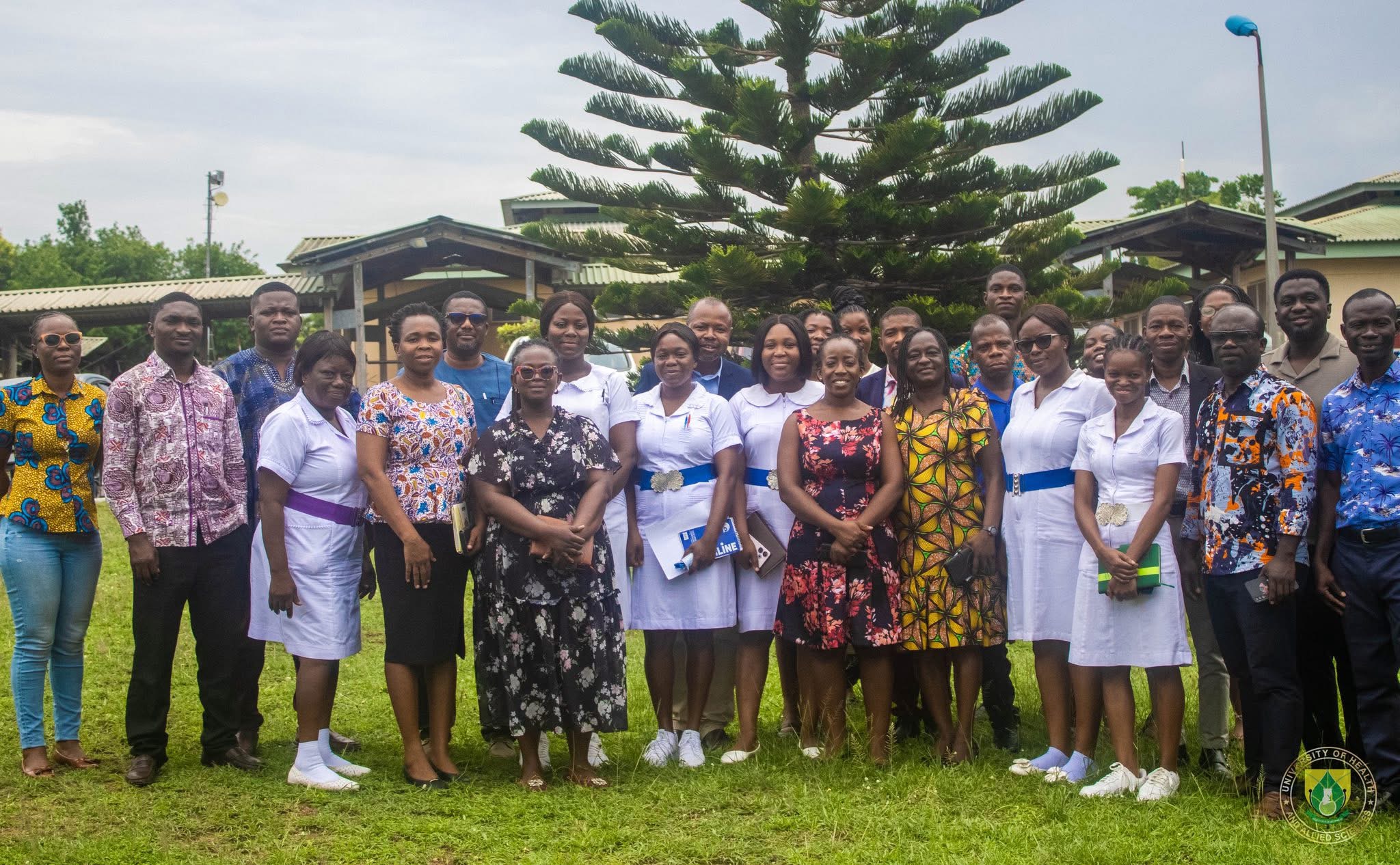
The University of Health and Allied Sciences has launched a three-year research project at Ho Teaching Hospital aimed at combating neonatal infections and antimicrobial resistance in the Volta Region.
The initiative, supported by the International Centre for Antimicrobial Resistance Solutions under its Global Research Programme, seeks to reduce newborn deaths linked to drug-resistant infections while strengthening Ghana’s response to antimicrobial resistance.
The project, titled Enhancing Infection Prevention and Rational Antibiotic Use for Neonatal Infection in Four Health Facilities in the Volta Region, Ghana, will be implemented at Ho Teaching Hospital, Volta Regional Hospital in Hohoe, Margaret Marquart Catholic Hospital in Kpando, and Keta Municipal Hospital.
According to the university, the selected facilities represent different levels of healthcare delivery and will help generate evidence suited to local conditions.
The research is structured around key areas including infection prevention, antimicrobial stewardship, behavioural science, economic evaluation, and policy regulation.
Matilda Aberese-Ako, Director of the Centre for Malaria Research at the UHAS Institute of Health Research, said proven interventions are most effective when adapted to local settings, adding that findings from the project will support national policy through collaboration with the Ministry of Health and the Food and Drugs Authority.
Selorm Tsrakasu described the project as timely and essential, citing increasing pressure on neonatal intensive care units due to drug-resistant infections.
The Principal Investigator, Kokou Hefoume Amegan-Aho, identified poor hand hygiene, weak diagnostic systems, and inappropriate antibiotic use as major contributors to neonatal infections.
The project team also includes Kwame Ohene Buabeng, with oversight from a steering committee featuring public health experts such as Evelyn Ansah and Margaret Gyapong.
UHAS says the project aligns with Ghana’s National Action Plan on Antimicrobial Use and Resistance and responds to earlier studies showing high levels of neonatal sepsis in Ho Municipality.
Over the next three years, researchers will work with participating facilities to improve infection surveillance, build staff capacity, and implement targeted strategies aimed at saving newborn lives and shaping future health policy.
UHAS Launches Three-Year Project to Tackle Neonatal Infections in Volta Region
UHAS Launches Three-Year Project to Tackle Neonatal Infections in Volta Region