The Vice-Chancellor of the University of Ghana, Professor Nana Aba Appiah Amfo, has cautioned that the world risks losing Africa’s rich cultural and linguistic identity if African languages are not intentionally integrated into the global artificial intelligence revolution.
She made the remarks while delivering the Fifth Warwick Distinguished Africa Lecture at the University of Warwick on Thursday, June 11, 2026, under the theme “Whose Language Counts? African Voices, Knowledge Systems, and the Future of AI.”
According to her, the exclusion of African languages from AI systems means that much of the continent’s knowledge systems, cultural expressions and identities remain invisible in digital technologies shaping the modern world. She warned that AI systems trained mainly on dominant global languages risk presenting Western knowledge frameworks as universal while marginalising African perspectives.
Professor Amfo highlighted that Africa’s more than 2,000 languages, spoken by over 1.4 billion people, are often underrepresented in the datasets used to train large language models. She noted that this is not due to a lack of linguistic complexity but because African languages are not sufficiently included in digital data systems.
She further explained that language exclusion goes beyond translation issues, describing it as a matter of visibility, knowledge representation and justice. “When a language is absent from the digital corpus, it is not merely a translation problem. It is a visibility problem… and ultimately a question of justice,” she stated.
Citing experiences from the University of Ghana’s experimental “Nana Aba AI” voice assistant project, she noted that while the system could replicate her English speech effectively, it struggled with Ghanaian names and languages, showing the limitations of current AI training models.
Professor Amfo stressed that Africa is already participating in the AI revolution but must decide whether it will remain a passive consumer or become an active contributor in shaping the languages, values and knowledge systems embedded in AI technologies.
She also referenced Ghana’s National AI Strategy, which includes a $250 million investment aimed at strengthening AI infrastructure and improving local language processing. The University of Ghana has also introduced an AI policy and plans to roll out a compulsory digital literacy and applied AI course for students.
The lecture was welcomed by the Vice-Chancellor and President of the University of Warwick, Professor Stuart Croft, who praised the importance of diverse perspectives in shaping global innovation and highlighted ongoing collaboration between both institutions.
Professor Amfo becomes only the second Ghanaian to deliver the prestigious lecture since its inception, following former Vice-Chancellor Emeritus Professor Ernest Aryeetey.
African Languages Must Be Central to AI Development – Prof. Nana Aba Appiah Amfo Warns
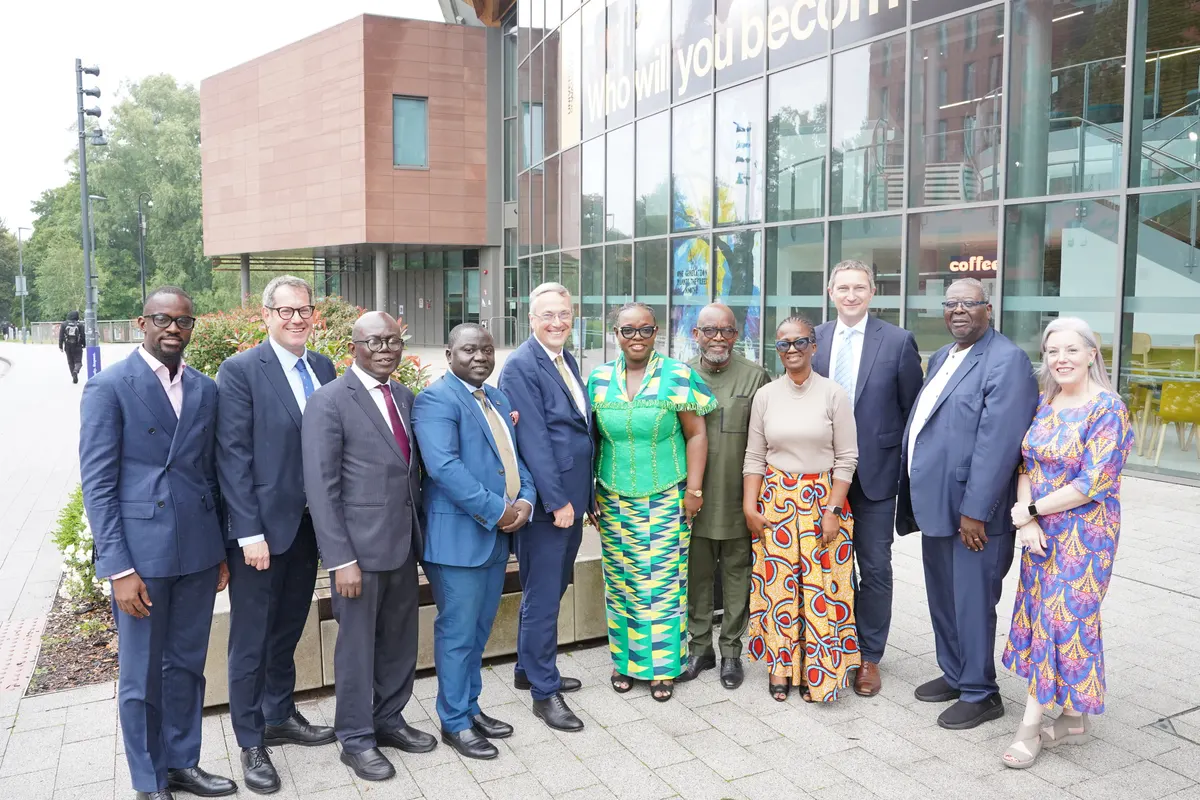
African Languages Must Be Central to AI Development – Prof. Nana Aba Appiah Amfo Warns