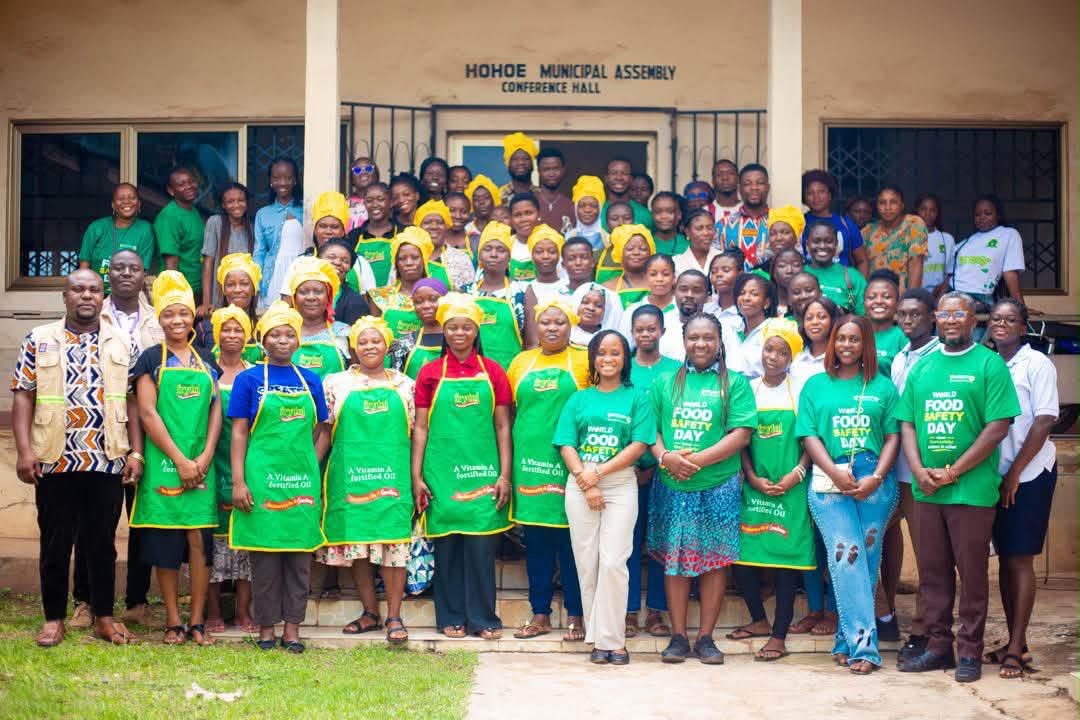
The University of Health and Allied Sciences (UHAS), through its Fred N. Binka School of Public Health (FNBSPH), has trained commercial food vendors in Hohoe on the safe use, storage, reuse and disposal of cooking oil as part of activities marking World Food Safety Day 2026.
The training, organised by the Family and Community Health Department on July 2, brought together food vendors, public health professionals, Environmental Health Officers, researchers, students and representatives from the Ghana Standards Authority, the National Health Insurance Authority (NHIA) and the Hohoe Municipal Assembly.
Participants received practical guidance on maintaining safe frying temperatures, identifying signs of oil deterioration, preventing contamination and improving overall food hygiene practices. Facilitators also demonstrated, using spent cooking oil samples collected from vendors, that the colour of cooking oil alone is not a reliable indicator of its safety and warned that repeated reuse of oil can pose serious health risks.
Head of the Family and Community Health Department, Dr. Faith Agbozo, encouraged vendors to actively apply the knowledge gained, while Professor Francis Zotor called for stronger collaboration between UHAS and food vendors to improve food safety and public health in the municipality.
The programme also featured an NHIS education session led by the Hohoe Municipal Director of the NHIA, Mr. Emmanuel Bansah, with participants benefiting from free NHIS membership renewals.
Supported by Wilmar Africa Limited and implemented in collaboration with several public health institutions, the initiative concluded with discussions on forming a Hohoe Food Vendors Association to promote continuous education, peer learning and stronger engagement with regulatory agencies.
According to the organisers, the training forms part of UHAS' broader commitment to community engagement, applied research and public health interventions aimed at promoting safer food practices and protecting consumers.
UHAS Trains Hohoe Food Vendors on Safe Cooking Oil Practices
UHAS Trains Hohoe Food Vendors on Safe Cooking Oil Practices