Women in Science, Technology, Engineering and Mathematics Ghana (WiSTEMGh), in collaboration with the Ghana Engineering Students Association (GESA-KNUST), the Women’s Commission of Women in Engineering (WinE), and the Science Students Association (SCISA) Women’s Commission, has called for stronger collaboration to advance women in STEM fields.
The call was made during a commemorative event held to mark International Women’s Day under the theme “United for Impact: Advancing Women through Collaboration.” The programme brought together students from the College of Engineering and the College of Science, including participants from the KNUST Obuasi Campus, to foster dialogue, mentorship, and strategic partnerships.
Speaking at the event, the General Secretary of WiSTEMGh, Mercy Badu, emphasized that advancing gender equality in STEM requires a shared responsibility among all stakeholders. She noted that the challenges facing women in science and engineering cannot be solved in isolation, stressing that collaboration remains essential to achieving sustainable progress.
Delivering the keynote address, Bright Kwakye-Awuah of the College of Science highlighted the critical role of unity in driving innovation and scientific breakthroughs. According to him, many of the world’s greatest discoveries have been the result of collective efforts rather than individual achievements. He also commended the growing contributions of African women in STEM, stating that their impact continues to shape industries and support national development.
Vida Akyeampong of the College of Engineering further underscored the importance of building strong professional networks and support systems. She explained that collaboration enables individuals to share opportunities, amplify each other’s work, and build resilience in competitive environments.
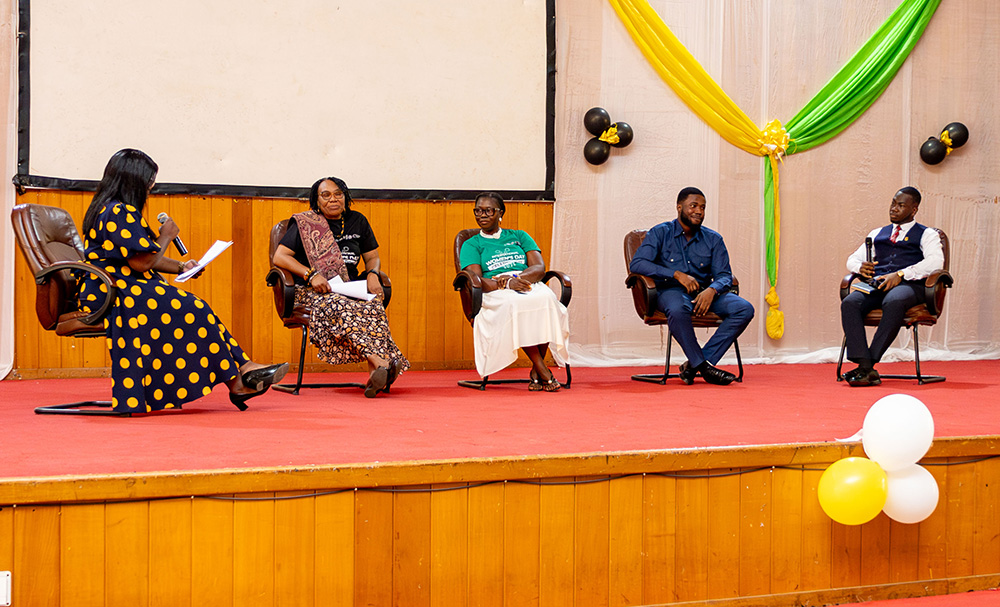
A panel discussion on the theme “Breaking Barriers: Addressing Gender Bias and Empowering Female Leadership in STEM” explored key challenges faced by women, including limited access to mentorship, leadership opportunities, and professional networks. Panelists highlighted the need for deliberate action to create inclusive environments that support female growth and leadership.
During the discussion, the President of WiSTEMGh, Ibok Nsa Oduro, encouraged women to be intentional and confident in leadership spaces. She advised young women to take initiative, speak up, and position themselves strategically to avoid being underestimated in male-dominated fields. She also stressed the importance of negotiation skills and understanding workplace dynamics.
Addressing systemic barriers, Professor Mercy Badu pointed out that gender biases still exist, particularly in career progression. She noted that factors such as maternity responsibilities and unequal expectations in academic output can slow down advancement for women. However, she acknowledged that perceptions are gradually changing, with more opportunities emerging for women to successfully balance career and family life.
The President of SCISA-KNUST, Nana Agyemang Boateng, urged students to prioritize personal development and continuous self-assessment. He encouraged young people to identify their strengths, work on their weaknesses, and invest in skills that will prepare them for future opportunities.
Also speaking on behalf of the GESA-KNUST President, Ken Kwabena Dadzie highlighted the importance of mindset and intentional self-development among women pursuing STEM careers. He advised students to move beyond the desire to simply stand out and instead focus on building strong technical and professional competencies. He added that the limited representation of women in engineering and technical fields continues to affect confidence and participation, making empowerment initiatives even more necessary.
The event concluded with a strong call for inclusive institutional policies, strengthened mentorship and sponsorship structures, and increased visibility of female role models. Organizers emphasized that sustained collaboration among institutions, student bodies, and professionals will be key to empowering more women and ensuring their success in STEM fields.
WiSTEMGh Urges Stronger Collaboration to Advance Women in STEM
WiSTEMGh Urges Stronger Collaboration to Advance Women in STEM