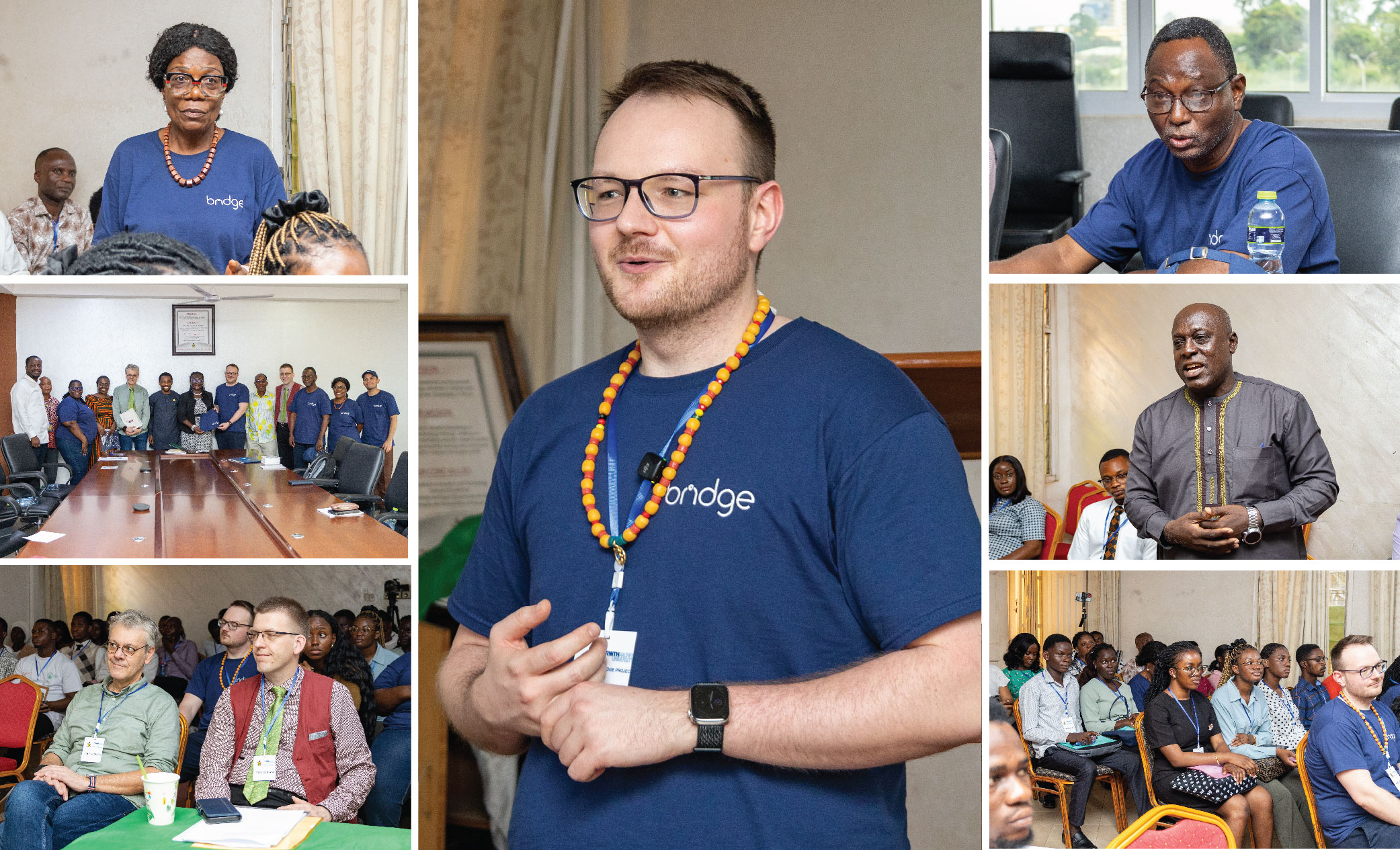
The Kwame Nkrumah University of Science and Technology (KNUST), Kumasi, and Germany’s RWTH Aachen University have held a wrap-up meeting for their three-year BRIDGE project on climate resilience, ahead of its official conclusion on March 31, 2026.
The project, launched in January 2023, brought together KNUST’s College of Art and Built Environment and the College of Humanities and Social Sciences. Their contributions were acknowledged during the closing meeting.
Formally titled Building Resilient Communities through the Integration of Climate Adaptation with the SDGs for University Education and Research (BRIDGE), the initiative sought to strengthen climate change education, research, and community engagement in Ghana.
The project received approximately €240,000 in funding from the German Academic Exchange Service (DAAD). It focused on linking academic research with community-led adaptation strategies while promoting institutional capacity building.
BRIDGE Coordinator, Professor Divine Kwaku Ahadzie, disclosed that the proposal was developed in 2022 following initial virtual discussions between the two institutions. The research examined climate resilience across Ghana’s three ecological zones: the savannah, semi-deciduous, and coastal areas.
He explained that major flooding events in 2023, particularly in Agbozume and Mepe in the Volta Region, influenced the project’s direction. In Mepe, a paramount chief provided an excavator to support drainage works, while a resident in Schweinheim, Germany, undertook similar flood-response actions.
Professor Ahadzie further revealed that the team secured additional funding from the Volkswagen Foundation to develop a digital exhibition documenting these experiences. The exhibition is scheduled to premiere on February 12.
Dr. Bruno Arich-Gerz, Professor in the Department of Linguistics at RWTH Aachen University, said the team visited affected communities to engage residents and document their reflections on the 2023 flooding events for future reference.
He described the digital exhibition as an outcome that emerged organically from the collaboration and a testament to the strength of the partnership between KNUST and RWTH Aachen.
Project Manager Florian Balmes highlighted the interdisciplinary collaboration, particularly with the Settlement Studies and Religious Studies departments, describing the experience as both engaging and rewarding.
Representing the Provost, Professor Charles Peprah, Vice-Dean of the Faculty of Built Environment, noted that the Centre for Settlement Studies aligns closely with the project’s climate and sustainability goals. He added that the partnership strengthened international research links and expanded policy-relevant, community-focused scholarship.
Vice-Dean of the Faculty of Social Sciences, Professor Samuel Adu-Gyamfi, attributed the project’s success to the strength of the academic team involved and expressed optimism that the partnership would continue into the future.
For many beneficiaries, the BRIDGE Project extended beyond academic exchange to practical community impact.
Ms. Victoria Ahenkan, a PhD candidate in the Department of Sociology and Social Work, said her participation inspired her to apply flood-management strategies learned in Germany within her own community in Ghana after experiencing a similar flood incident.
Another beneficiary, Alexander Afriyie Osei, a PhD candidate in the Department of Land Economy, said the project broadened his understanding of how high-level decisions affect vulnerable communities and underscored the importance of interdisciplinary research approaches.
Project partners at KNUST included Professors Sylvana Rudith King and Victor Selorme Gedzi, as well as Dr. Margaret Makafui Tayviah. RWTH Aachen collaborators included Prof. Dr. Michael Leuchner, Dr. Michael M. Kretzer, and Prof. Heribert Nacken.
The BRIDGE Project leaves behind strengthened institutional cooperation, expanded research capacity, and a model for integrating climate adaptation with sustainable development goals in higher education and community engagement.
KNUST, RWTH Aachen Conclude Three-Year BRIDGE Climate Resilience Project
KNUST, RWTH Aachen Conclude Three-Year BRIDGE Climate Resilience Project